

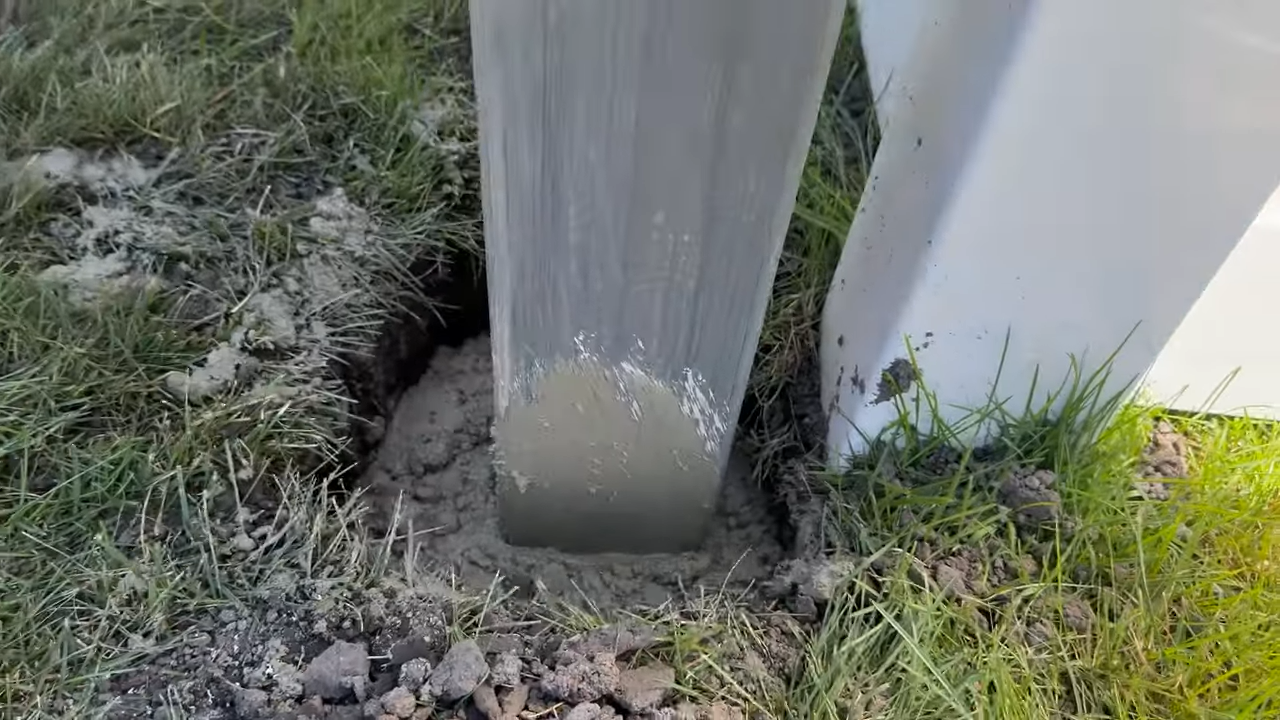
Concrete vs. Driven Posts: Which Foundation Survives Minnesota?
When you invest between $10,000 and $30,000 in a professional fence installation, you aren’t just buying panels and gates—you are buying a structural asset for your property. However, what’s happening underground will determine if your investment lasts forty years or forty months.
The debate centers on the foundation: Deep-Set Concrete Footings vs. Driven Pipe (No-Dig) Technology. At Midwest Fence, we’ve spent 75 years observing the physics of Minnesota soil. While “No-Dig” methods have become popular for their speed and lower entry price, we remain committed to the concrete standard. This isn’t just an opinion; it’s a matter of civil engineering and protecting your investment into a fence.
The “No-Dig” Shortcut: Understanding Driven Pipes
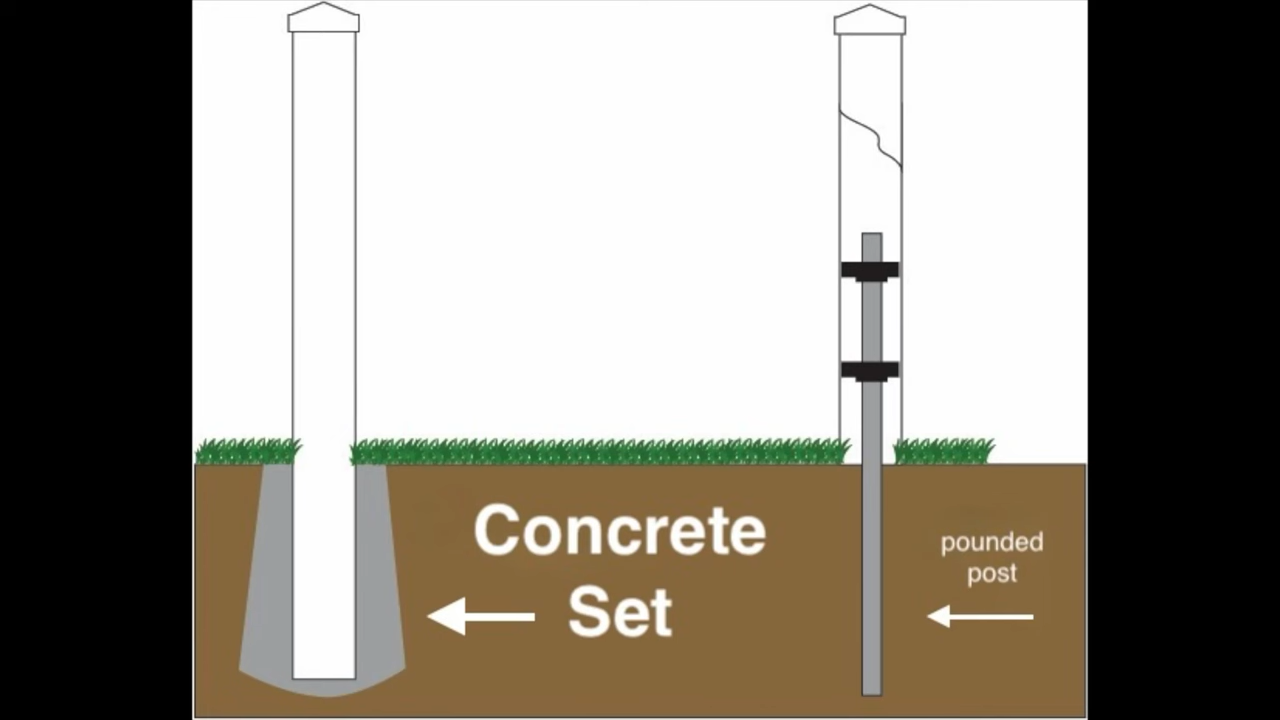
Driven pipe technology involves pounding a steel pipe directly into the dirt. On paper, it’s a win-win for the installer: it’s fast, and there is no dirt to haul away.
But speed doesn’t equal strength. Driven pipes rely entirely on soil friction. The pipe is held in place by the pressure of the earth pressing against it. While that might work in a laboratory or a dry climate, Minnesota’s environment is anything but stable.
Have us contact you
Lateral Stability: Why Driven Pipes Lean in Wet Clay
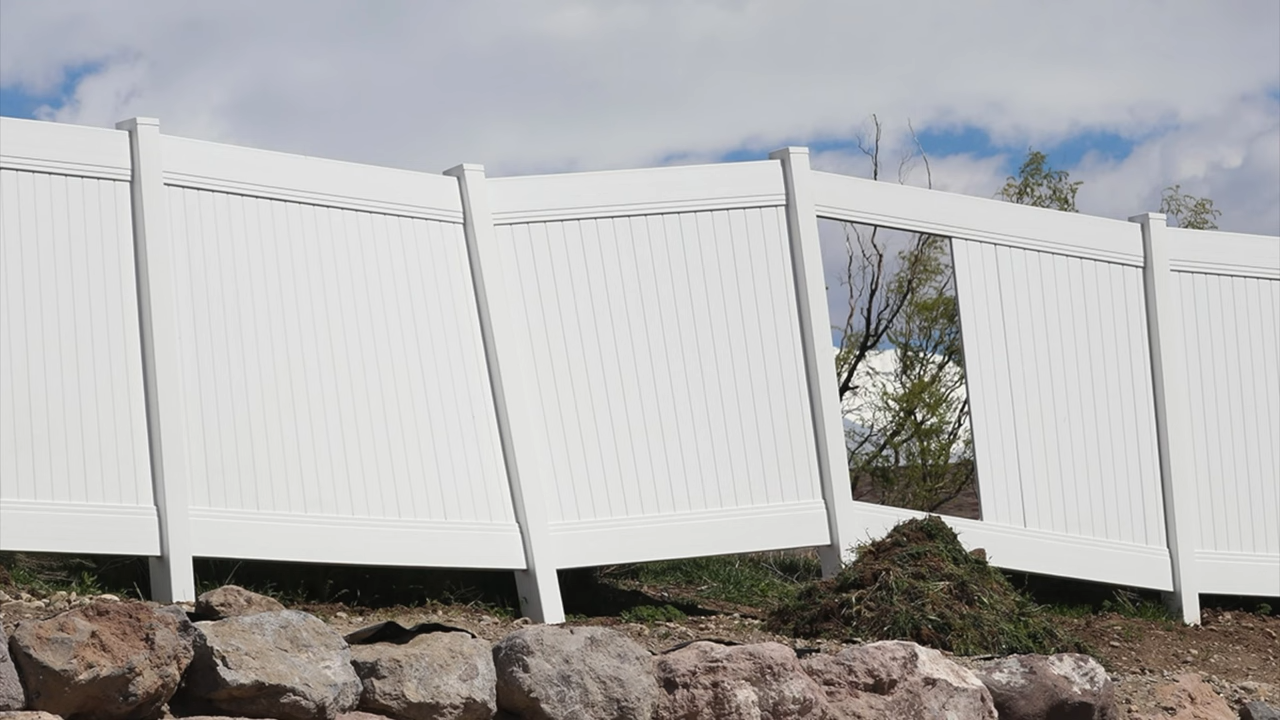
The primary enemy of your fence isn’t just gravity; it’s lateral load. A 6-foot solid privacy fence acts as a massive sail. On a windy afternoon in a suburb like Woodbury or Lakeville, a single fence panel can experience hundreds of pounds of pressure.
As Fence Man Dan explains, a driven steel pipe is “not necessarily supportive of this large structure that’s built on top of it.” In the spring, when Minnesota’s heavy clay soil turns to mud, that vital soil friction disappears. Under wind pressure, a thin metal pipe will “slice” through the wet soil like a knife through butter. Once that soil is displaced, your fence begins the permanent, ugly lean that is so common with “bargain” installations.
Midwest Fence Builds to Last
Midwest Fence understands that the most frequent reason vinyl fences fail is the foundations, which is why we do not take shortcuts to cut costs and increase profit. Instead, we build to last.
The Science of the “Concrete Foot”
A Midwest Fence installation utilizes a 10-inch to 12-inch wide concrete footing to ensure your fence stays straight forever.
- Predictable Outcomes: We use concrete because it allows us to achieve a “predictable outcome” and “long-term solutions” for the homeowner.
- Surface Area: By surrounding the post with concrete, we increase the surface area of the foundation by over 500%. This massive footprint makes it physically impossible for the post to “slice” through the soil.
- The “Bell” Shape: We dig our holes with a “bell” at the bottom. This creates a wide, heavy anchor that locks into the earth below the frost line.
The Midwest Comparison: At a Glance
| Feature | Deep-Set Concrete (The Midwest Way) | Driven Pipe / “No-Dig” (Shortcuts) |
| Foundation Base | 10″–12″ Concrete Footing | 1.5″–2″ Steel Pipe |
| Lateral Resistance | Superior (Massive surface area) | Low (Small surface area) |
| Strength Protection | Anchored with hand-poured concrete footings | Relies on friction / varies |
| Structural Integrity | Designed for 25–40+ years | Prone to “heaving” or leaning |
Why We Still Use Concrete After 75 Years
“My father started Midwest Fence back in the late 40s,” says owner Tom Corgan. For over seven decades, we have refused to use shortcut methods that benefit the contractor more than the homeowner.
Leading competitors who take shortcuts might offer a “Lifetime Product Warranty,” but they rarely talk about the Installation Warranty. At Midwest Fence, we don’t subcontract; we use our own employees and our own trucks to ensure your investment survives the seasons, the wind, and the shifting Minnesota earth.