
The Ultimate Guide to Premium Vinyl Fencing in Minnesota
Let’s be honest: when you start looking for a new fence, you’re probably dreaming of Saturday afternoons where you aren’t scraping paint or replacing rotted cedar planks. You want a “set it and forget it” solution. In the world of home improvement, that usually leads you straight to vinyl.
But here is where things get tricky. If you walk into a big-box retail store or scroll through a bargain-basement installer’s website, they’ll tell you that “plastic is plastic.” They’ll show you a shiny white picket and say it’s maintenance-free.
At Midwest Fence, we’ve spent 75 years watching Minnesota winters turn those “bargain” fences into brittle, yellowing eyesores. We don’t just sell PVC; we engineer perimeter security specifically for the local climate. If you’re looking for Vinyl Fencing in MN, you need to know why the “DNA” of your fence determines whether it lasts five years or fifty.
Why “Professional Grade” is the Only Grade That Matters
In the fencing industry, there’s a massive difference between what we call “Retail Grade” and “Professional Grade.” Think of it like the difference between a toy car and a heavy-duty truck. They might both be made of metal and have four wheels, but only one is designed to pull a trailer through a snowstorm.
Have us contact you
Most leading competitors use what is known as “regrind”—recycled plastics that have already been melted down once before. This material has already lost its structural “memory.” At Midwest Fence, we use professional-grade Bufftech® by CertainTeed. It’s virgin vinyl, engineered for high-impact resistance. When the Twin Cities temperatures swing from -30°F in January to 95°F in July, our vinyl has the flexibility to expand and contract without cracking.
As our in-house Fence expert Fence Man Dan puts it, not all PVC is created equal. There are massive differences between the stuff you find at a box store and the premium products we carry. Beyond durability, a professional vinyl fence is a major selling point; if a potential buyer has a dog or children, it “checks a lot of boxes” and makes your property significantly more desirable.
The Science of TiO2: Industrial-Strength Sunscreen
You wouldn’t spend a day at the State Fair without sunscreen, and your fence shouldn’t either. The sun’s UV rays are the primary reason cheap vinyl fences eventually turn a sickly shade of yellow or start “chalking” (that white powder that rubs off on your clothes).
The secret ingredient to a forever-white fence is Titanium Dioxide (TiO2). This mineral acts as a shield, reflecting UV rays rather than absorbing them.
While many other fence companies try to cut costs by thinning out their formula, Midwest Fence adheres to a strict 10-parts-per-100 TiO2 requirement. By maintaining this high concentration, we ensure your fence stays bright and stays flexible. Without this “sunscreen,” the PVC becomes brittle over just a few seasons. When a Minnesota freeze-thaw cycle hits, that brittle vinyl can shatter like glass if a lawnmower kicks up a rock or a dog jumps against it.
Midwest Fence Builds to Last
Midwest Fence understands that the most frequent reason vinyl fences fail is the foundations. This is why we don’t take shortcuts to cut costs and increase profit; instead, we build to last. We use concrete because it allows us to achieve a “predictable outcome” and provide “long-term solutions” for your home.
When you get a quote from other companies, you might notice their price is suspiciously low. Often, that’s because they are saving money where you can’t see it: underground.
- The “Driven Post” Trap: Many installers today use “driven posts,” which means they simply pound a steel pipe into the dirt. It’s fast, it’s cheap, and it’s a recipe for disaster in Minnesota. Our clay-heavy soil shifts constantly. A 6-foot solid privacy fence acts like a giant sail; without a proper anchor, a strong wind in Lakeville or Woodbury will eventually “slot” the soil, leaving your fence with a permanent, ugly lean.
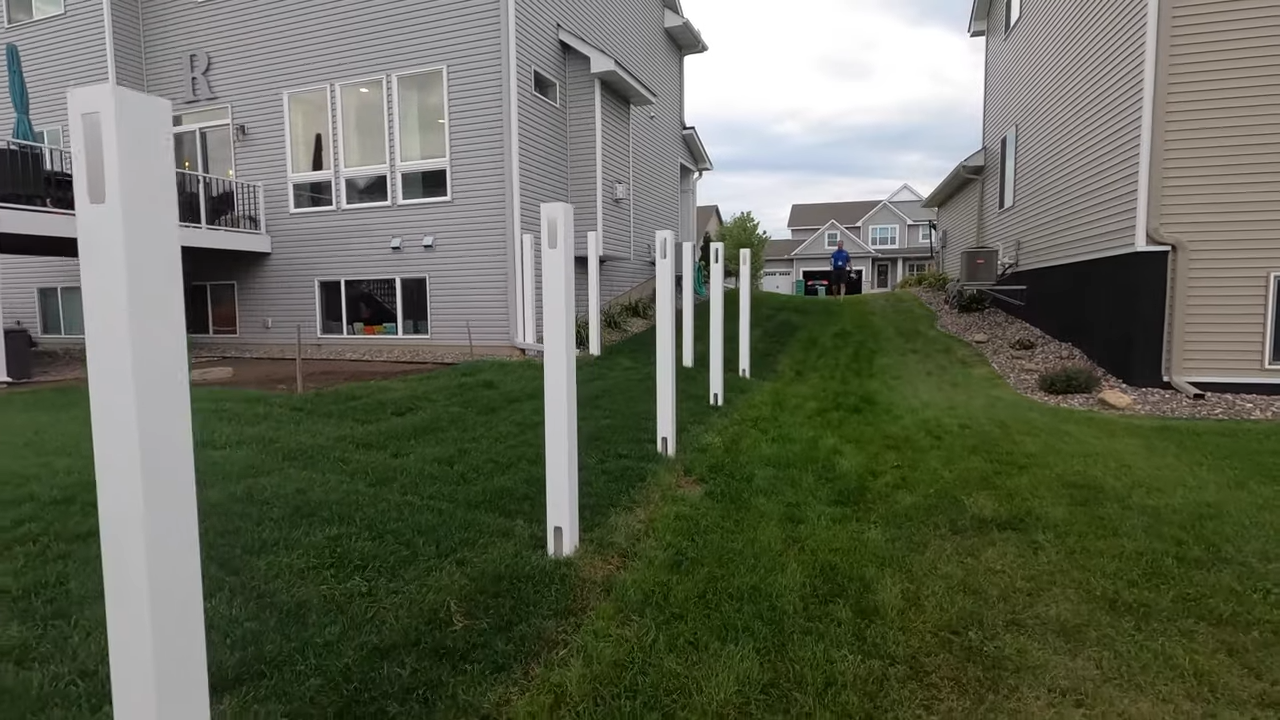
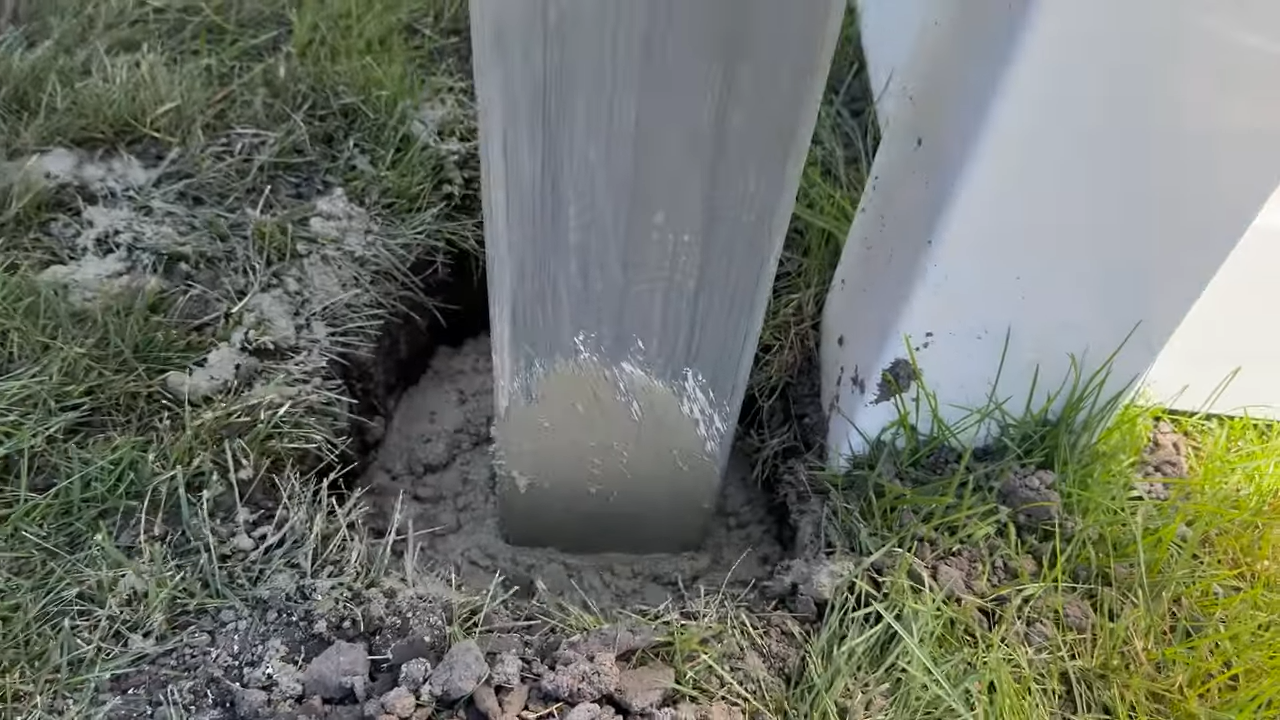
- The “Concrete Post Footing” Standard: We dig. By setting our posts in a deep, bell-shaped concrete base, we create a stable foundation for your fence. As Dan explains (Video Below: “Concrete vs Driven Posts”), the concrete footing forms a “bell” at the bottom that helps lock the post in place. When the post doesn’t move, the fence doesn’t move. To maximize your investment, we also guide you on property lines. We recommend building “all the way up to it without going over” to help prevent neighbors from unintentionally claiming your land for gardens or trees.
- Aluminum Reinforcement: Have you ever seen a vinyl fence where the bottom rail looks like a “sagging belly”? That happens when companies use 6-foot-wide panels without any internal support. Midwest Fence uses 8-foot wide panels with aluminum-reinforced bottom rails. It’s an extra step that ensures your fence stays level and straight for decades.
Looking Like Wood, Lasting Like Vinyl
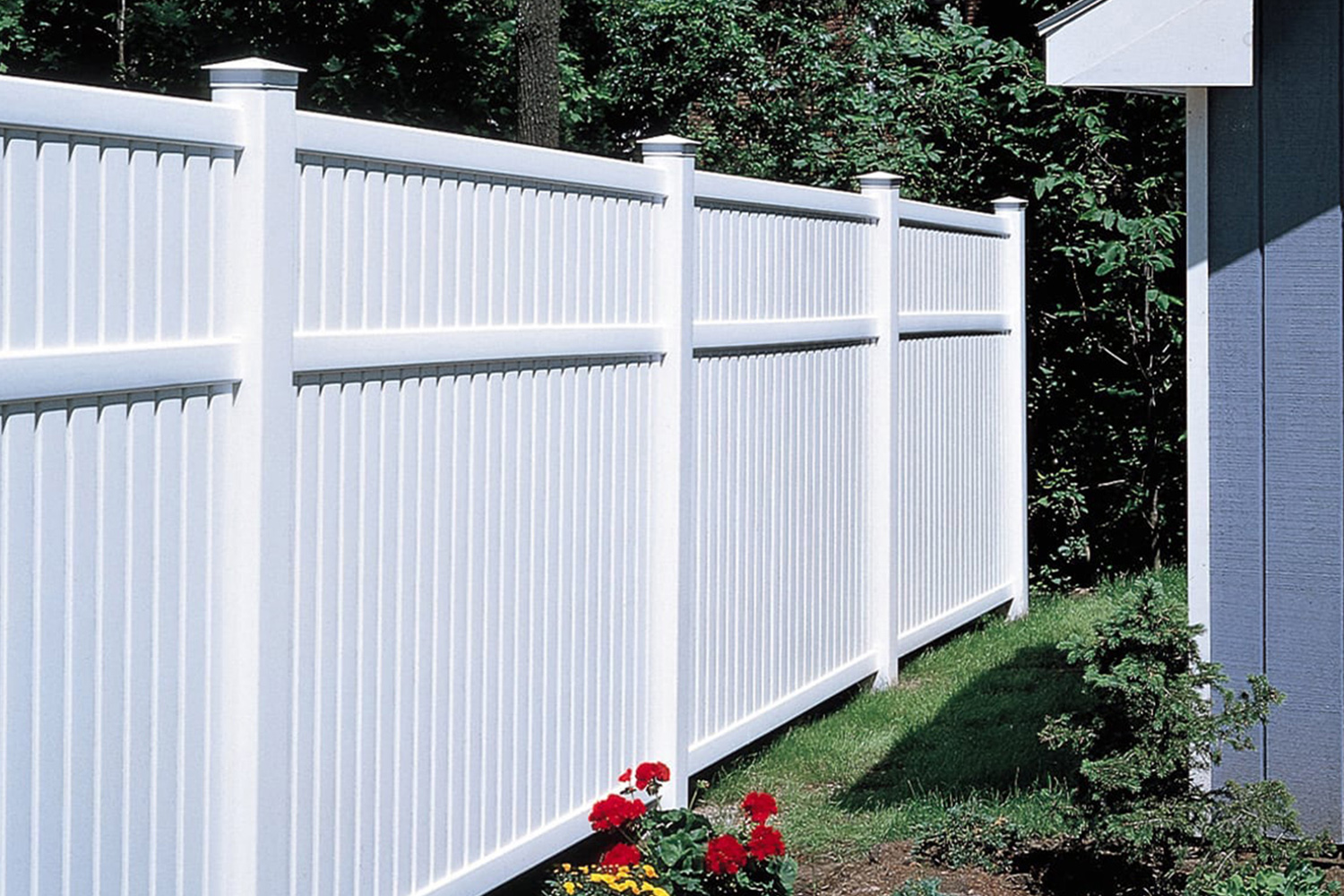
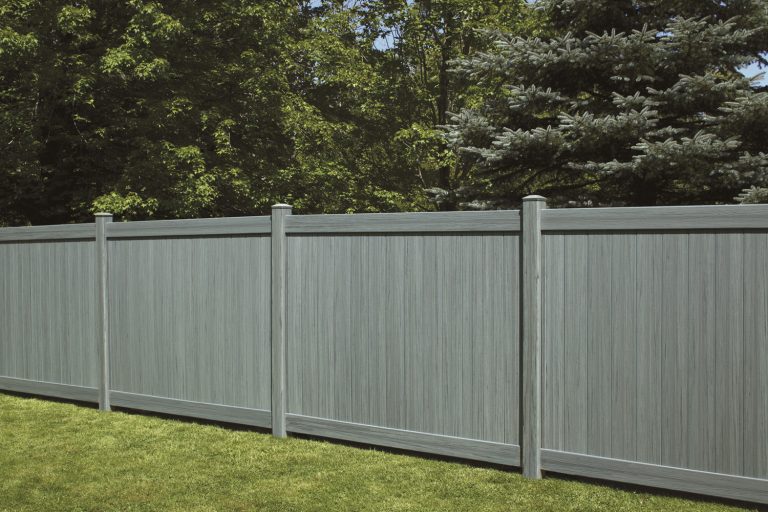
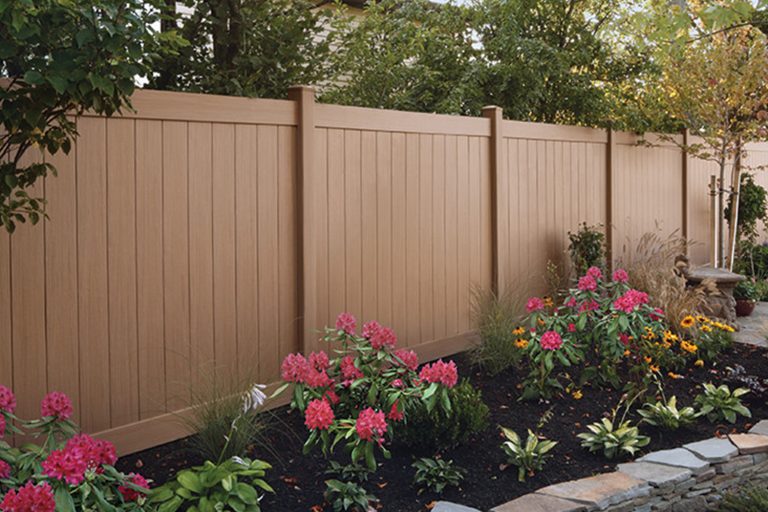
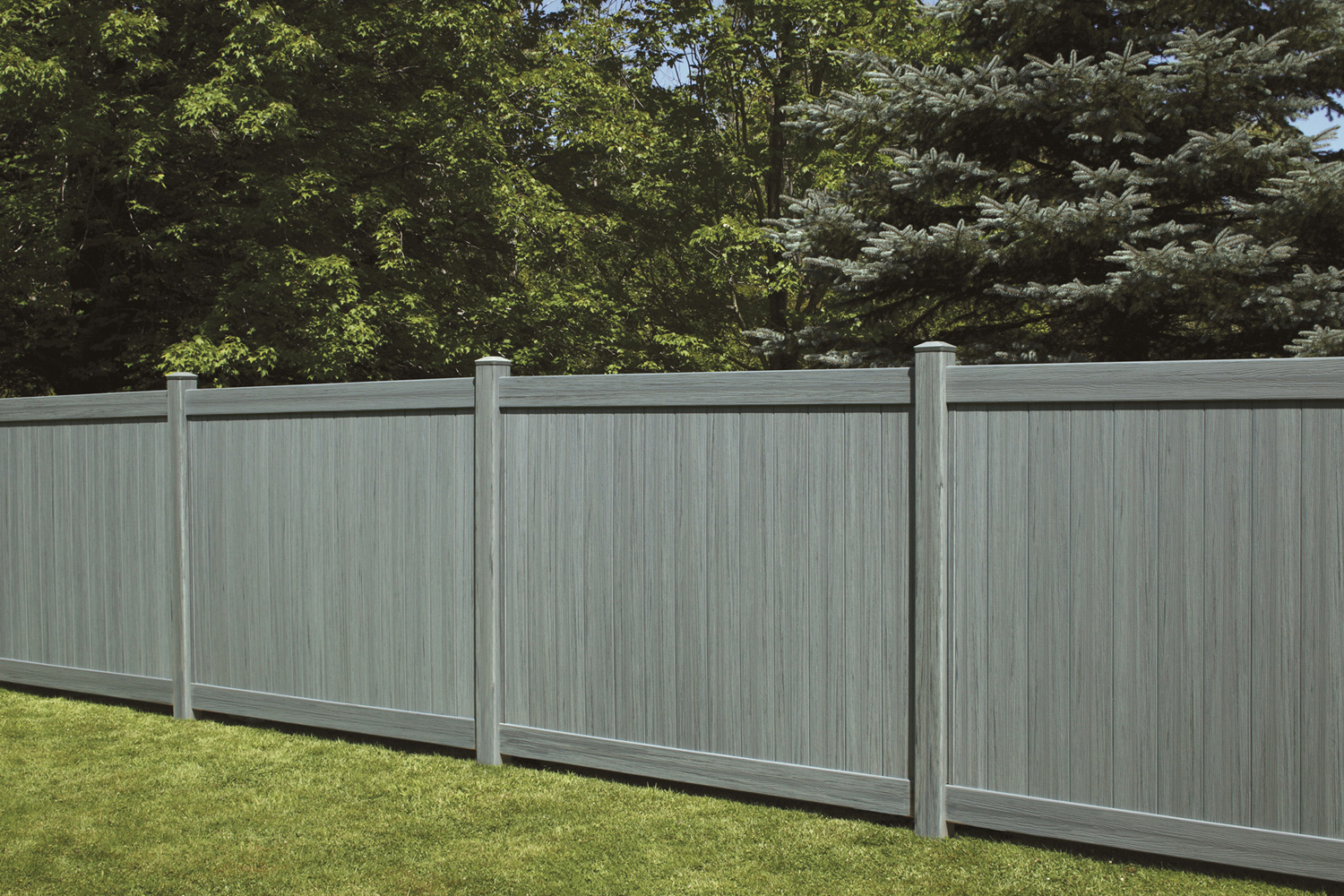
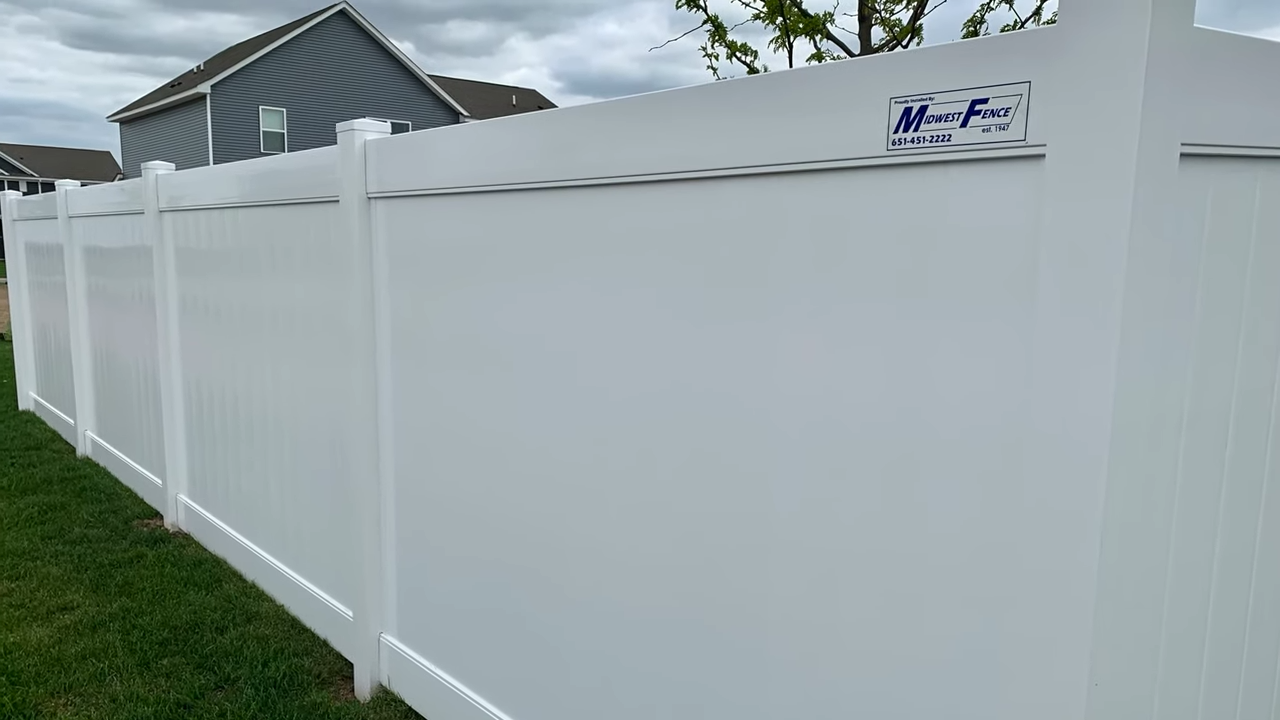
If you’ve ever seen a vinyl fence that looks like shiny, cheap plastic, you were likely looking at a retail-grade product. High-quality vinyl should have a matte finish. Whether you need a particular color, style, or height, PVC is an ideal maintenance-free solution that fits almost any property. Not only does it look more like professionally painted wood, but it also hides scratches and prevents that “plastic-y” glare in the afternoon sun.
Experience the 7-Acre Difference
We believe you should see what you’re buying. Most contractors operate out of a truck and a brochure. Midwest Fence operates out of a 7-acre facility in South St. Paul. We buy our materials by the trainload, which allows us to guarantee we have the stock to finish your project on time while keeping our pricing competitive despite our higher material standards.
Hartford Style Vinyl Fence
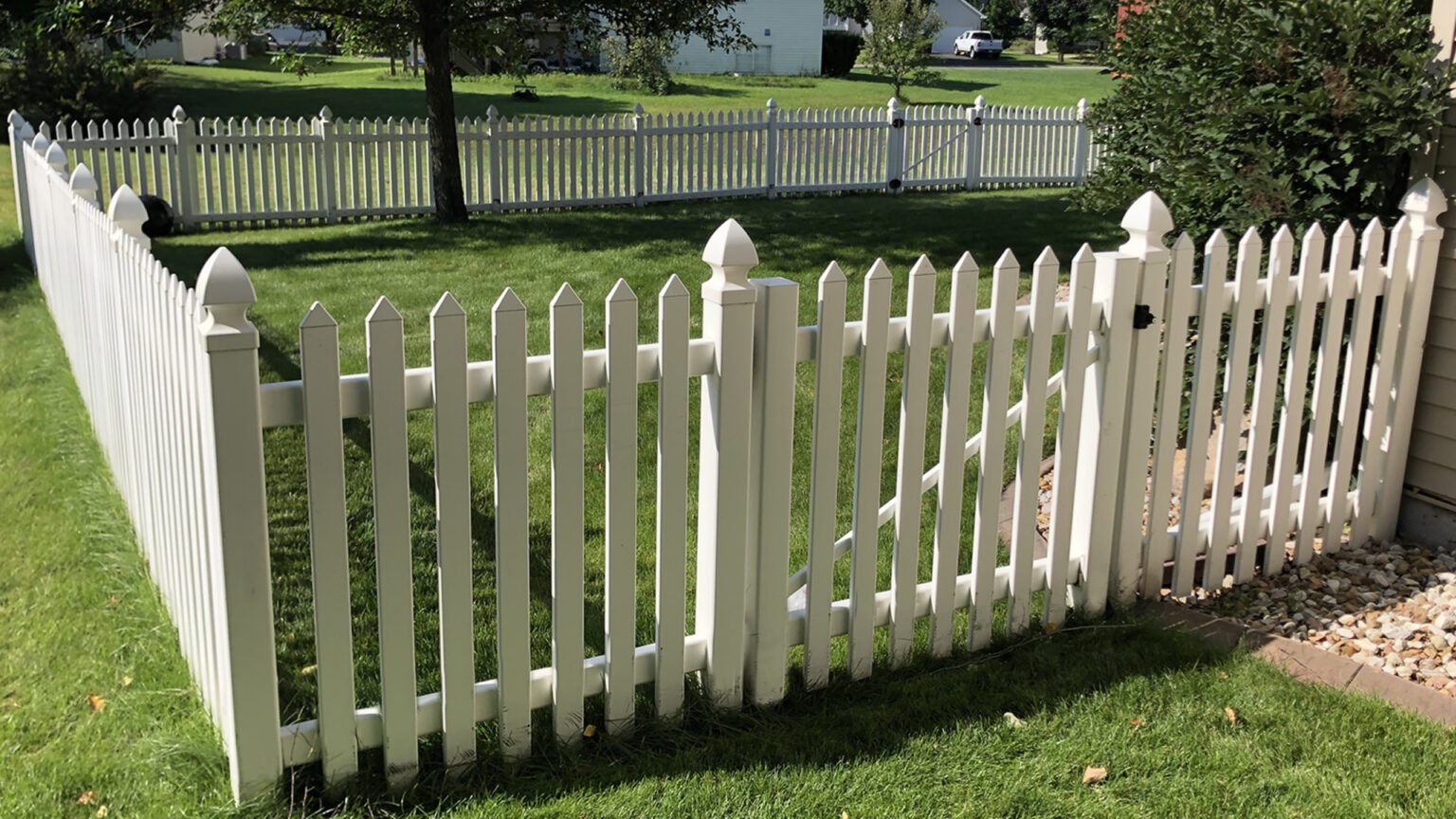
Picket Style Vinyl Fence